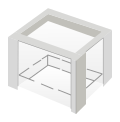
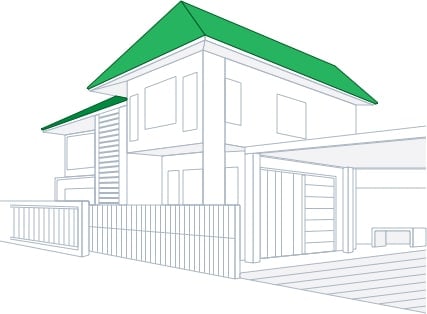
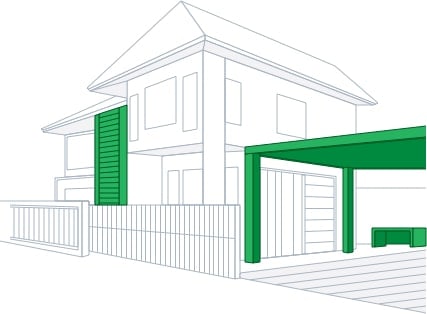
A hairstyle matters the look as a roof does for a house.
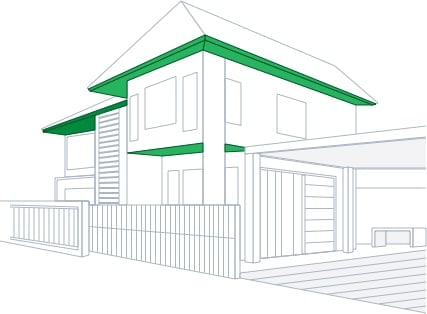
A good hair day never disappointed, so does a beautiful roof - a crucial element for a beautiful home. Roof functions are to protect and decorate an attractive house. Regardless of roof styling, roof overhangs also known as “eaves” are an important detail to both aesthetic and practical functions. The eaves hide the exposed rafters within, protect windows and foundation of the house, and keep rainwater from direct contact with exterior wall. Good eaves are also usually durable, thick, and wide as the wider eaves, the more protection it offers.

All About Eaves : Types of Eaves
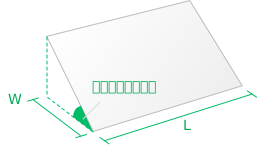
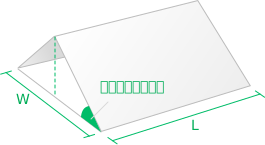
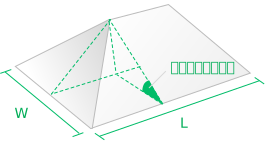
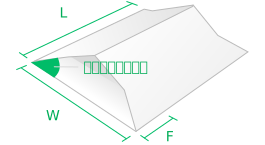
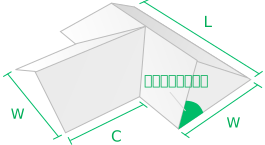
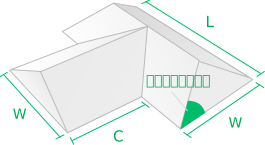
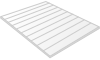
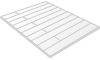
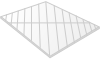
Eaves conceals the rafters and unites the roof with the house. There are wide variety of eaves style src="stocks/blog/o0x0/uv/wi/uvwipaxqoza/02 รูปประกอบ 2.jpg" alt="02 รูปประกอบ 2.jpg" width="552" height="422" />
What are the Excellent Eaves? : Eaves Material Options
Eaves is an essential exterior element of a house. Therefore, the material must be durable to extreme weather conditions and low maintenance. In the past, natural wood was widely used to appreciate the wood aesthetics. Albeit modern days, wood substitute or composite materials are growing its popularity due to their distinguished properties. Here are pros and cons of common eaves lining materials which could help guide you when choosing the eaves.
1. Natural Wood / Solid Wood
Hardwood is commonly used as natural wood eaves. It is convenient to be cut in any preferable sizes and shapes for decoration. However, solid wood is considerably heavy, and highly flammable unless it has been well treated against fire. Also, it needs high maintenance, especially for insect activity and color fading.
2. Synthetic Plastic Wood (PVC)
Synthetic plastic wood are alternatives for eave sheet. ‘Plastic’ is widely used due to its durability and light weight. This advantage has elevated the synthetic wood with plastic mixed (known as PVC) to be an alternative for eaves lining. Most of PVC eaves are ready-to-use, furnished in colors and patterns, and required low maintenance. However, PVC is manufactured in a single sheet resulting in time-consuming installation. Also, high quality or extra thick synthetic wood with plastic is costly since sometimes the price could go over those natural wood.

3. Wood Substitutes “Fiber Cement Wood”
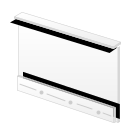
Fiber cement wood is considered the most popular material for eave lining. Durability, long lasting use, and reasonable prices are ensured. Fiber cement is also low maintenance, insect free, heat resistance, and well designed for installation. Speaking of design, fiber cement eave is crafted with wide variety of colors, patterns, and gimmicks to save installation time and budget such as 2-in-1 eave, eave that virtually look as two pieces of wood, but a single wood. Although fiber cement eave needs to be replaced after years, the number of ‘years’ usually lasts a long time.
While there are a lot of materials src="stocks/blog/o0x0/it/ds/itdssz0wzwb/04 รูปประกอบ 4.jpg" alt="04 รูปประกอบ 4.jpg" width="547" height="418" />
SHERA, the pioneer of fiber cement wood, has series of eaves to be chosen for your beautiful home. For simple elegant design, SHERA Eaves Curved Edge, SHERA Eaves Beveled Edge and SHERA Eaves Pro are highly recommended. As well as the new release with Diamond Cut Technology “SHERA Eaves>https://www.shera.com/en/products/roof/eave?model=1622093188216758