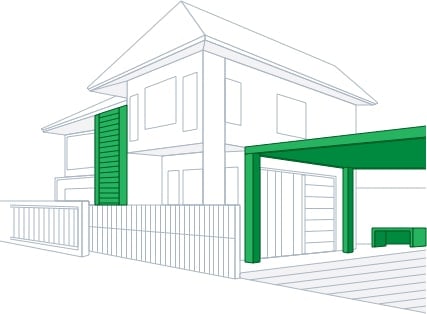
A home grows alongside the lives of its inhabitants, meaning any renovation or extension must look far beyond sheer aesthetics. Homeowners must carefully weigh structural dead loads, construction timelines, dust and noise levels on site, and compatibility with existing foundations. Choosing the wrong material can stall projects, inflate budgets, or needlessly strain your home's original framework.
Fiber cement has rapidly become the material of choice for both homeowners and professional contractors during home additions and remodeling. Offering significantly lighter loads than traditional masonry, seamless compatibility with dry-wall framing systems, rapid installation, and a vast array of profiles, from flat boards and siding planks to louvered battens and textured decorative panels, fiber cement redefines what is possible in modern architecture.
Here are five essential reasons why fiber cement should anchor your next home extension.
- Ultra-Lightweight construction to limit excess loading
Structural load is the absolute first factor professional builders evaluate when extending existing properties whether you are framing a cozy garden lounge or partitioning an upper-floor bedroom. Traditional brick-and-mortar walls can weigh up to a staggering 200 kilograms per square meter, compounding structural stress that can lead to costly foundation issues down the road.
Fiber cement integrates effortlessly with lightweight framing and Drywall Systems across walls, ceilings, and specialized extensions, allowing you to tailor thickness and installation methods to any space. When assembled over metal framing, fiber cement assemblies reduce total wall weight by roughly five times compared to masonry. This drastically minimizes the risk of structural settling and eliminates the expensive necessity of pouring massive new foundational footings.
- Versatile design: From ultra-modern minimalism to natural wood aesthetics
Exposed concrete and brick offer timeless character and retro charm, but they often bring stark rigidity, rigid design limitations, and high ongoing maintenance demands.
Fiber cement unlocks unprecedented architectural freedom. It offers crisp, white-surfaced boards for sleek modernist lines. Alongside, advanced fiber cement timber siding that faithfully replicates the deep and intricate grains of natural wood. You gain the warm, organic ambiance of natural timber without the chronic headaches of termite infestation, warping, or rotting. With a comprehensive portfolio spanning lap siding, louvered battens, wave patterns, and stone-textured finishes, architects enjoy absolute creative liberty over texture and form.
- The Clean Precision of Dry Construction
Traditional brick-and-mortar masonry relies on a messy "wet system" that leaves sites chaotic, choked with high dust volumes, and plagued by trapped moisture, making consistent quality control difficult to maintain across every stage of work.
Fiber cement utilizes a Dry Construction System, transforming construction into a clean, highly efficient process. Instead of wet mortar mixing, standardized, factory-finished boards are installed systematically over steel or timber framing. This dry-construction approach saves labor timelines, eliminates heavy construction dust, minimizes site waste, and yields continuously flawless walls without relying on the unpredictable hand-finishing skills required for plaster. Consequently, labor hours, timelines, and material budgets remain under control from start to finish.
- Exceptional Durability for Harsh Tropical Climates
Fiber cement is an advanced composite material engineered from Portland cement, pure silica sand, high-grade cellulose fibers, and strengthening additives. Cured under high-pressure steam in an Autoclave process, it emerges as a dimensionally stable, highly resilient material that resists warping, shrinking, intense heat, blazing sunlight, and torrential downpours, making it exceptionally well-suited for tropical climates.
Beyond structural endurance, fiber cement is completely immune to termites and wood-boring insects, and meets international non-combustible fire ratings to elevate overall extension safety. However, it is important to note that the thermal insulation performance of any wall system ultimately relies on comprehensive wall design, specifically the integration of insulation batts within the framing cavities, rather than the cladding board alone.

- A More Sustainable, Eco-Friendly Choice
Modern homeowners increasingly ask a crucial question about renovation materials: Where did this come from, and what carbon footprint does it leave behind? Fiber cement answers this with two distinct environmental advantages.
First, fiber-grade wood alternatives deliver authentic wood textures and grain without harvesting a single tree, preserving natural forestry resources. Second, dry-system installations generate virtually zero on-site material waste or dust compared to traditional masonry.
On the manufacturing front, forward-thinking producers develop low-carbon cement production processes utilizing recycled inputs, helping projects meet foundational criteria for green building certifications. If sustainability is a core goal for your renovation, always verify the product's environmental certifications before breaking ground.
Explore Fiber Cement with SHERA
If these five advantages inspire you to incorporate fiber cement into your upcoming home extension, SHERA offers an extensive range of fiber cement boards and siding profiles engineered with cutting-edge technology, including Color Through technology, which locks pigments deep into the core to keep your extended living spaces looking vibrant for years to come.
Explore our complete product catalog and home extension services today at shera.com/compare.